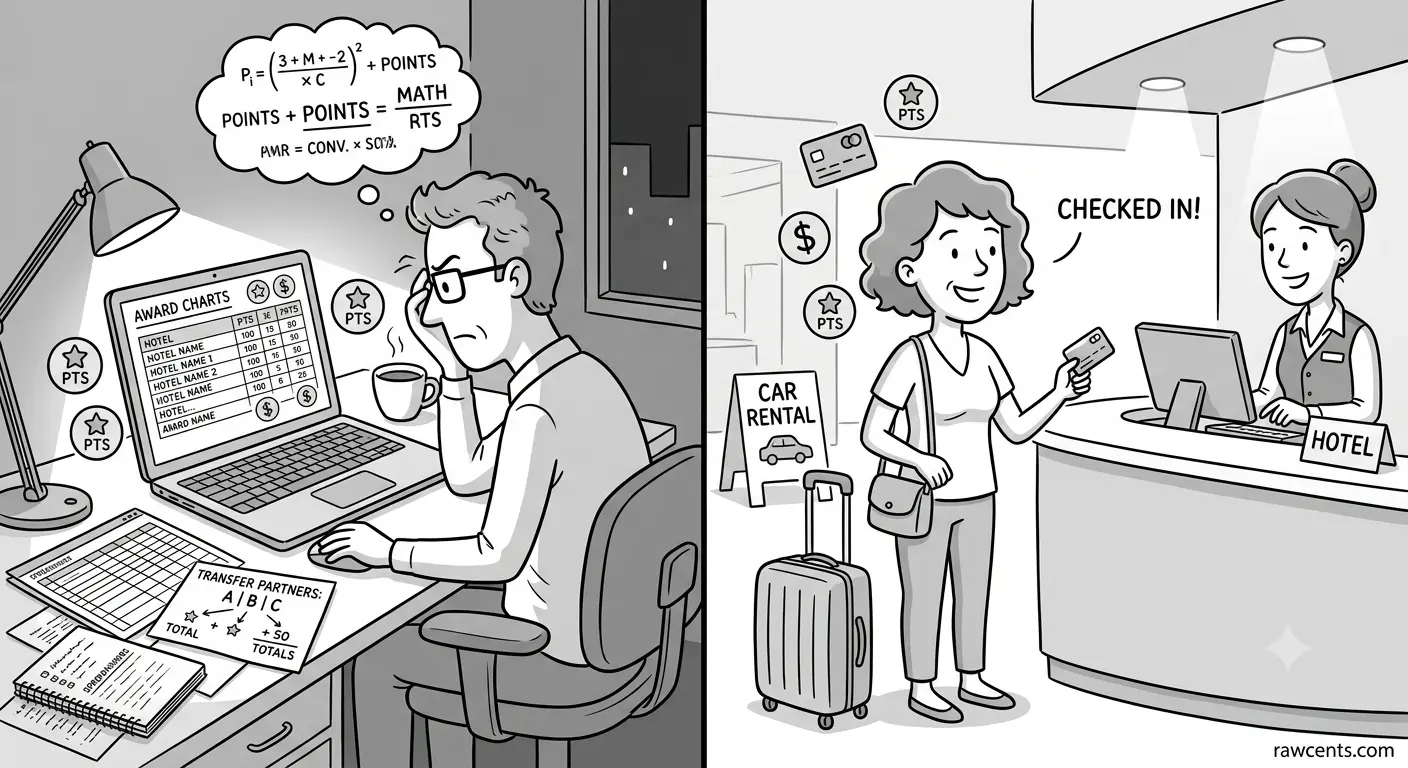
Short answer first: yes, for almost everyone who isn’t transferring points to Hyatt. No, if Hyatt was the whole reason you had the card.
Chase refreshed the Sapphire Preferred on June 15, 2026. The $95 annual fee didn’t move, which is genuinely rare for a card update these days. It picked up new bonus categories, a bigger hotel credit, and a Global Entry credit that used to be reserved for pricier cards. At the same time, Chase cut the Hyatt transfer ratio from 1:1 down to 4:3. That’s not a rounding error. That’s a 25% haircut on every point you send over, and it’s the single change everyone’s actually arguing about.
Here’s the math nobody skips past if they’re being honest about it: transfer 40,000 Ultimate Rewards points under the old ratio and you land 40,000 Hyatt points. Under the new one, that same 40,000 becomes 30,000. Flip it the other way — if you’d been aiming for a 75,000-point redemption, a multi-night stay at a Category 5 property, you now need 100,000 Chase points to get there instead of 75,000. That’s 33% more points for the exact same room.
Old ratio, one Chase point bought roughly 1.7 to 2.2 cents of Hyatt value once you factored in how generous Hyatt’s award chart used to be. Under 4:3, that same point is worth closer to 1.2 to 1.6 cents once you account for the fewer Hyatt points you’re actually receiving. It’s not a rumor or a vibe. It’s a straight percentage cut, and it stacks on top of Hyatt’s own award chart changes from earlier this year, where some properties already jumped from 15,000 to 20,000 points a night. Two devaluations in one summer is a lot to absorb if Hyatt was your whole strategy.
Who this actually hurts, in dollars
Say you’d been sitting on 30,000 Ultimate Rewards points earmarked for two nights somewhere in the 15,000-points-a-night range — a redemption that would have run you close to $1,000 to $1,100 paying cash. Under the old 1:1 ratio, that trip cost exactly 30,000 points. Under 4:3, you’re now short: you’d need 40,000 points to get the same 30,000 Hyatt points landed in your account. That gap — 10,000 extra Chase points, or roughly $150 to $200 of value depending how you price a point — is the actual tax this refresh puts on people who were doing this regularly.
If you transfer, say, 60,000 Chase points to Hyatt most years, the loss lands somewhere around $270 to $300 in a single transfer, and it repeats every time you move points from here on out. That’s the number that’s actually driving the reaction, not vague annoyance.
Timeline, because the dates matter more than people realize
Apply for the Sapphire Preferred on or after June 15, 2026, and you’re at 4:3 immediately — no grace period. Already had the card before that date? You keep 1:1 through September 30, 2026. Starting October 1, everyone drops to the new ratio, no exceptions. Ink Business Preferred cardholders are on the exact same clock, which matters if you’re running a side business and treating your Ink card as a Hyatt pipeline. If you’ve got points sitting around and a real Hyatt stay in mind, that four-month window before October is the time to move them, not after.
What actually got better, and what’s untouched
None of the earning categories from before this refresh got cut. Dining, streaming, online groceries, Chase Travel bookings — all of it stayed exactly where it was. What changed is what got added on top:
- 3x on gas and EV charging, new as of June 15
- 3x on vacation rentals through Airbnb, Vrbo, and a handful of similar platforms
- The annual hotel credit doubled from $50 to $100, usable on any Chase Travel hotel stay, no enrollment
- A $120 credit toward Global Entry, TSA PreCheck, or NEXUS every four years — a perk that used to live exclusively on cards charging four times the fee
- Emergency evacuation and transportation coverage, which is a real addition to the protections stack, not a marketing line
- A complimentary year of Apple TV, if you activate it by the end of 2026
- The complimentary DashPass and monthly DoorDash credit, carried over from before
The two things going away are the Hyatt ratio and the 10% anniversary points bonus, which is being phased out entirely. On its own the anniversary bonus was never worth much — even $50,000 a year in spend only nets 5,000 bonus points — so its loss barely registers next to the Hyatt cut.
One clarification worth making since it trips people up: the bonus categories weren’t touched at all. What shifted is the redemption side. Chase moved away from a flat 1.25-cent guaranteed rate through its travel portal a while back, replacing it with Points Boost, which only bumps value up to 1.5x on select hotels and flights instead of applying across the board. That’s a separate change from the Hyatt transfer cut, but it happened close enough in time that a lot of people lump the two together. Earning didn’t get worse. Cashing out at a guaranteed rate got less automatic.
Where Hyatt loyalists are actually moving their spend
Scroll through enough cardholder forums this month and one pattern shows up over and over: people shifting everyday spend toward Bilt Rewards instead of Chase. Bilt still transfers to World of Hyatt at 1:1, no card required to unlock it, and it’s the only other transfer partner Hyatt has left that hasn’t been touched. Bilt Points also come from paying rent or a mortgage with no transaction fee, which is a category almost nothing else rewards, and stacking that with Bilt’s shopping portal or a card like the Bilt Palladium can realistically put someone at Hyatt-worthy balances faster than a Chase trifecta ever did.
It’s not a clean swap — Bilt runs a dual-currency system (Bilt Cash and Bilt Points), the rules around which purchases qualify for rent-day bonuses shift monthly, and there’s real, openly discussed risk that a program funded partly by landlord partnerships isn’t guaranteed to be sustainable forever. But for the specific person who only ever cared about Chase points as a Hyatt pipeline, Bilt is currently the closest thing to what Chase used to offer.
The Sapphire Reserve upgrade math
The other move people are actually running the numbers on is upgrading to the Sapphire Reserve, which keeps the 1:1 Hyatt ratio untouched — for now, and nobody’s pretending that’s a permanent guarantee. The math only works in the Reserve’s favor once you’re transferring a real volume of points. Somewhere around 60,000 Ultimate Rewards points sent to Hyatt in a given year is roughly the break-even point where the $700 fee gap between the two cards starts paying for itself in preserved transfer value, especially stacked against the Reserve’s own welcome bonus and travel credit.
Under 60,000 points a year, you’re very likely better off staying on the Preferred and eating the 4:3 ratio. Above that, especially if you’re already booking premium Hyatt categories, the Reserve starts to look less like a $795 splurge and more like a hedge against future devaluations. We broke down that exact fee-jump math, including the Venture X comparison a lot of people are running side by side with it, in our Sapphire Reserve fee increase breakdown.
The Ink Business Preferred loophole, if you’ve got one
If you run a small business and hold the Ink Business Preferred, you’re on the same October 1 clock as everyone else — but there’s a workaround worth knowing before that date hits. Chase lets you pool points across accounts you hold, so if anyone in your household also carries a Sapphire Reserve, you can move your Ink points into that account first and transfer out at the full 1:1 ratio before it’s gone. It’s a temporary safe harbor, not a permanent fix, since it only works as long as the Reserve itself keeps 1:1. But if you’re sitting on a large Ink balance and already have Reserve access somewhere in the family, it’s worth doing before the window closes.
Who actually wins here
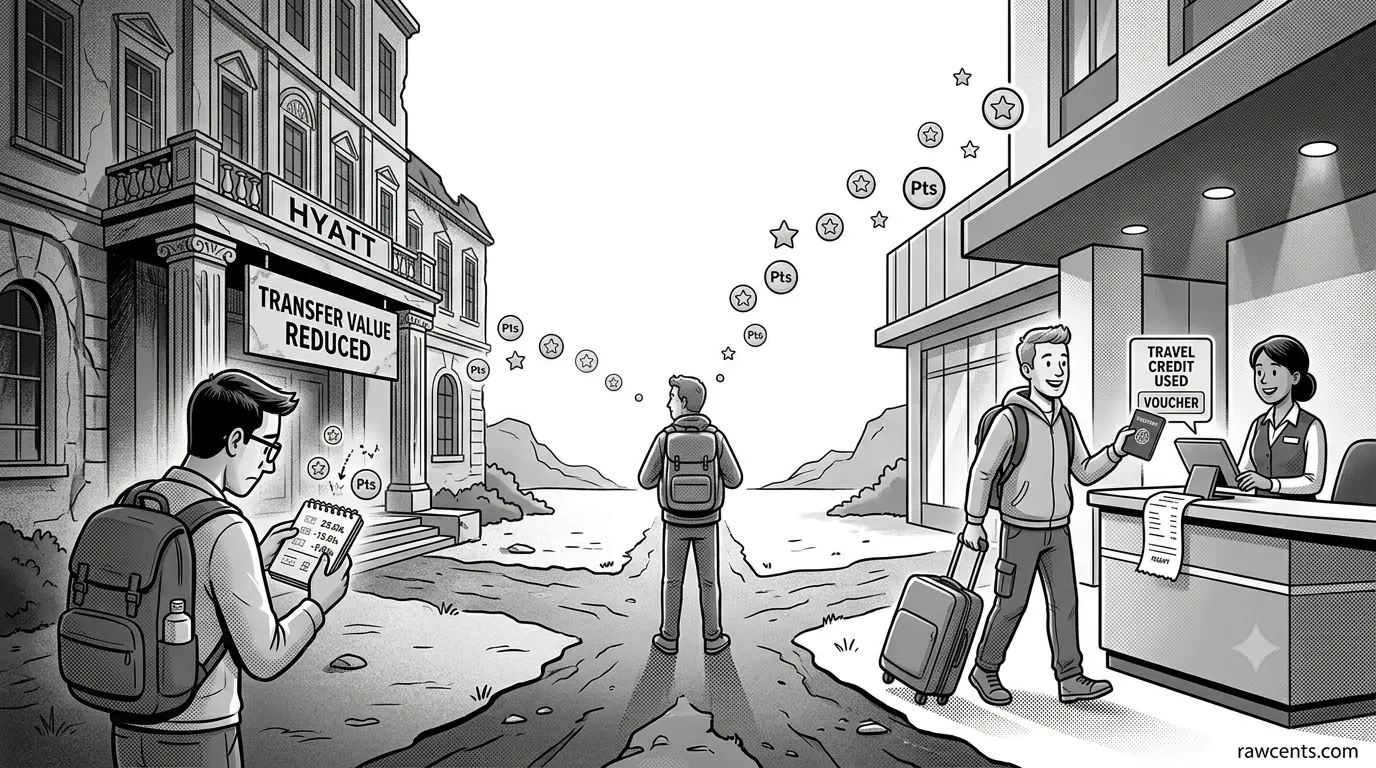
Not everyone in the comment sections is angry. A good chunk of the reaction from people who travel once or twice a year, book a couple of hotel nights, and never transfer a point in their life is closer to relief. A $100 hotel credit plus a $120 Global Entry credit covers most or all of a $95 fee before a single point gets redeemed for anything. Add in the new gas and vacation-rental categories, and for a household that mostly wants a card that works quietly in the background, this refresh reads as a straightforward net gain — new value stacked on a fee that stayed exactly where it was.
That’s really the split. Two groups of cardholders, optimizing for two different things, both looking at the same announcement and walking away with opposite conclusions. Neither read is wrong. They’re just not describing the same card.
Should you keep it?
Keep the Sapphire Preferred if you travel a handful of times a year, want built-in trip protection without a $795 fee, and you’re fine treating Hyatt as one option among several rather than the entire plan. The new credits alone likely cover your fee most years.
Consider the Reserve if you’re regularly transferring 60,000+ points to Hyatt annually and the 1:1 ratio is worth the jump on its own. Consider Bilt if Hyatt is genuinely your only transfer priority and you’re willing to deal with a slightly more complex points system to keep the full value. And if your spending is scattered across categories the Preferred doesn’t reward well, pairing it with a stronger everyday earner usually beats trying to force one card to do everything — we go through exactly which cards fill that gap in our guide to pairing cards with a Chase Sapphire.
If dining is where most of your spend actually goes, it’s also worth checking whether Chase or Amex comes out ahead now that portal redemptions work differently — we ran that math separately in our Chase vs. Amex dining rewards comparison.
And if you’re brand new to any of this and just applied, or you’re wondering whether you can get a Sapphire welcome bonus again after already holding one, two things are worth reading before you touch another application: how Chase actually counts your 5/24 status, and our step-by-step breakdown on resetting the Chase 48-month Sapphire rule.
The card didn’t get worse. It got more honest about who it’s actually for. If that’s not you, the exits are all listed above.